
Human-centred leadership for the 2030 Agenda
Leaving no one behind — from Fukushima to the world

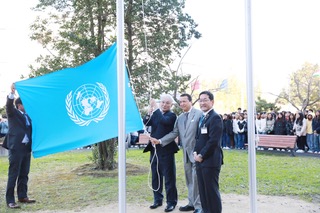
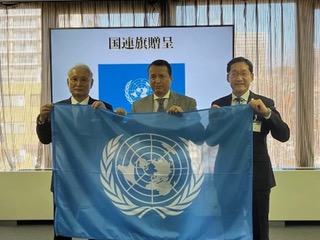
CIFAL Japan is the newest centre in the global UNITAR CIFAL Network — officially established on 2 December 2024 and inaugurated on 31 May 2025 in Iwaki City, Fukushima. As a regional hub of the United Nations Institute for Training and Research (UNITAR), we advance the Sustainable Development Goals through capacity-building, policy education and inclusive leadership development across Japan and the Asia-Pacific region.
CIFAL Japan's Priority Areas of Activity
Promotion of Diversity and Inclusion
Acceleration of Global Learning for Younger Generations
Promotion of Health and Well-being
Promotion of ESG through Business
2025 impact snapshot
By the numbers
Our first seven months of operations, reported to the XXII CIFAL Global Network Annual Steering Committee Meeting (London, December 2025).
- Beneficiaries reached
- 3,200
- Initiatives delivered
- 47
- Share that were women or youth
- 52%
- SDGs addressed
- 10 of 17
Latest
News & events
CIFAL Japan Inaugural Symposium held in Iwaki
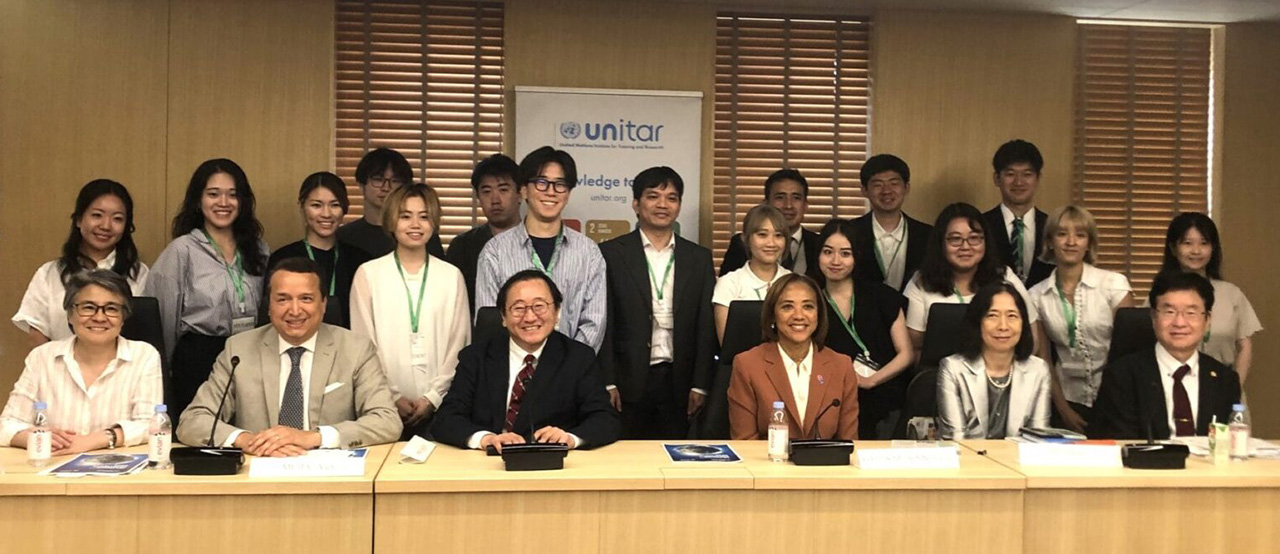
With H.E. Amb. Luis Gallegos, Honorary Chair, and 150 participants on-site and online — the Centre's first Advisory Council was convened at Higashi Nippon International University.
The Children's Conference of the Future in Support of the United Nations FUTURE SUMMIT at Expo 2025 Osaka Kansai
CIFAL Japan cooperated in running the two-day children's conference organised by the Peace Communication Foundation, in which children discussed peace, multilateralism and the SDGs.
SYNC25 Tokyo with The Valuable 500
Supported by The Valuable 500 and The Nippon Foundation, SYNC25 established a decade-long accountability framework for disability-inclusive leadership.
SDGs we directly support
- 4 Quality education
- 5 Gender equality
- 8 Decent work
- 10 Reduced inequalities
- 11 Sustainable cities
- 13 Climate action
- 16 Peace & institutions
- 17 Partnerships
Partner with CIFAL Japan
We work with the UN system, national and local governments, academia, the private sector and civil society — designing training tailored to the realities of each region.